

Suburb Selection Criteria: Data Points That Point to Growth
What to measure, and what to ignore
Search for the best suburbs to invest in Melbourne has to offer and you’ll find plenty of lists, most of them built on what grew last year. Last year’s growth tells you where the money has already been made. It doesn’t tell you where the next gains might come from.
These are the suburb selection criteria we use to look at where a suburb is heading, grouped into four areas, along with the numbers that look useful and aren’t. None of them guarantees growth. The aim is to find suburbs where several point the same way.
Why one number is never enough
A suburb can show strong recent growth and still be a poor buy, if the price has run ahead of local incomes, or the rent doesn’t cover the cost of holding it. Another can look flat and be quietly strengthening.
ASIC’s Moneysmart makes a similar point: where and what you buy will affect your return, and it recommends looking for high growth, higher rental yield and low vacancy rates, along with any proposed planning changes that may affect future prices. That’s several measures at once, not one.
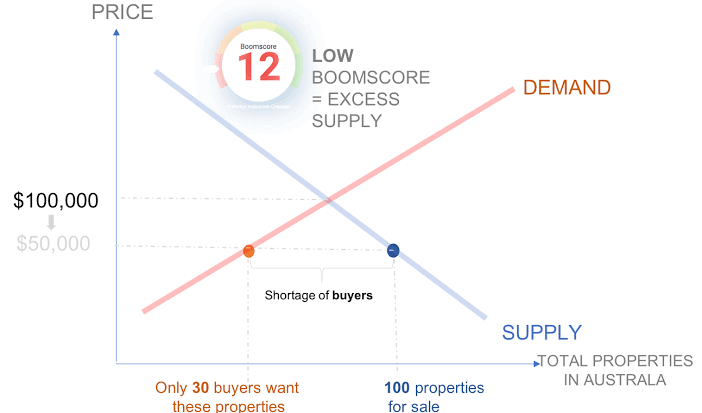
Demand: who wants to live and rent here
Population growth. More people usually means more demand for housing. Look at the direction over several years, not one year’s figure.
Demographics. Who is moving in, and whether their incomes support the prices and rents in the suburb.
Rental demand. How quickly rental properties are leased and how rents have moved. This is the income side of your return.
Owner-occupier and investor mix. It shows who is driving the buying, and how the suburb may behave when conditions change.
Supply: how much competition is coming
Vacancy rate. Low vacancy generally points to strong rental demand. What counts as low varies, so compare with surrounding suburbs.
Stock on market. A lot of unsold stock can mean buyers have the upper hand. A shortage can mean the opposite.
Zoning changes. Rezoning can add housing supply, or restrict it. Both change the outlook.
Development approvals. Approvals show what’s coming. A big pipeline of similar new dwellings can compete with your property for tenants and buyers.
Growth drivers: what could lift the suburb
Planned infrastructure. Transport, health and education investment can change how a suburb is used. Check where each project actually sits in funding and delivery, because announced isn’t built.
Major employers. Jobs nearby support rental demand and incomes.
Transport links. Commute times shape who wants to live there.
Capital growth trends. Useful as context, but only as one input. A past trend is not a forecast.
Risk and affordability: what protects the downside
Affordability against income growth. If prices have raced ahead of local incomes, the pool of buyers who can afford to follow may be shrinking.
Market cycle position. The same suburb can be a poor buy at a peak and a good one after a correction. Timing doesn’t beat quality, but it matters.
Rental yield sustainability. Can the rent hold up, or is it propped up by a short-lived shortage? This is what keeps your cash flow safe.
Numbers that look useful but can mislead
- Median price on its own. It says nothing about value, and can swing with the mix of properties sold.
- Last twelve months’ growth. It shows what happened, not what’s next.
- “Best suburbs” lists. By the time a suburb is widely talked about, much of its early growth has often already happened.
- A selling agent’s description of the area. Useful colour, but not data.
Putting it together
We test every candidate suburb across all four areas, then look for agreement. A suburb that scores well on growth drivers but poorly on affordability or rental sustainability doesn’t make the cut on a good headline alone.
Then comes the part a list can’t do: checking the shortlist against your own strategy, borrowing capacity and risk tolerance. A suburb that suits one investor can be wrong for another, which is why we don’t publish a single “best suburb” and call it advice.
You can see how this fits into the wider process on our Suburb Selection page, and how it starts with your goals in our Property Investment Strategy.
Got a question? Get your answer
What is the most important data point for choosing a suburb?
There isn’t one. Look for several that agree: demand, supply, growth drivers and affordability. A single strong number can hide a weakness elsewhere.
Can data predict capital growth?
Not with certainty. Data can show which suburbs have conditions that favour growth, but it can’t promise it. Treat it as improving your odds, not removing the risk.
What is a good vacancy rate?
Lower vacancy generally points to stronger rental demand. What counts as low varies by market, so compare a suburb with the area around it rather than a single target number.
How many data points should I look at?
Enough to see the whole picture. Our framework looks at over 30 across national, city and suburb levels, grouped into demand, supply, growth drivers and risk.
Are the best suburbs to invest in Melbourne the same for everyone?
No. A suburb that suits an investor chasing growth may not suit one who needs rental income. The right suburb depends on your goals, budget and risk tolerance.

Ready to find your suburb?
Stop chasing last year’s best performer. Let’s talk about where the data points for your goals.